

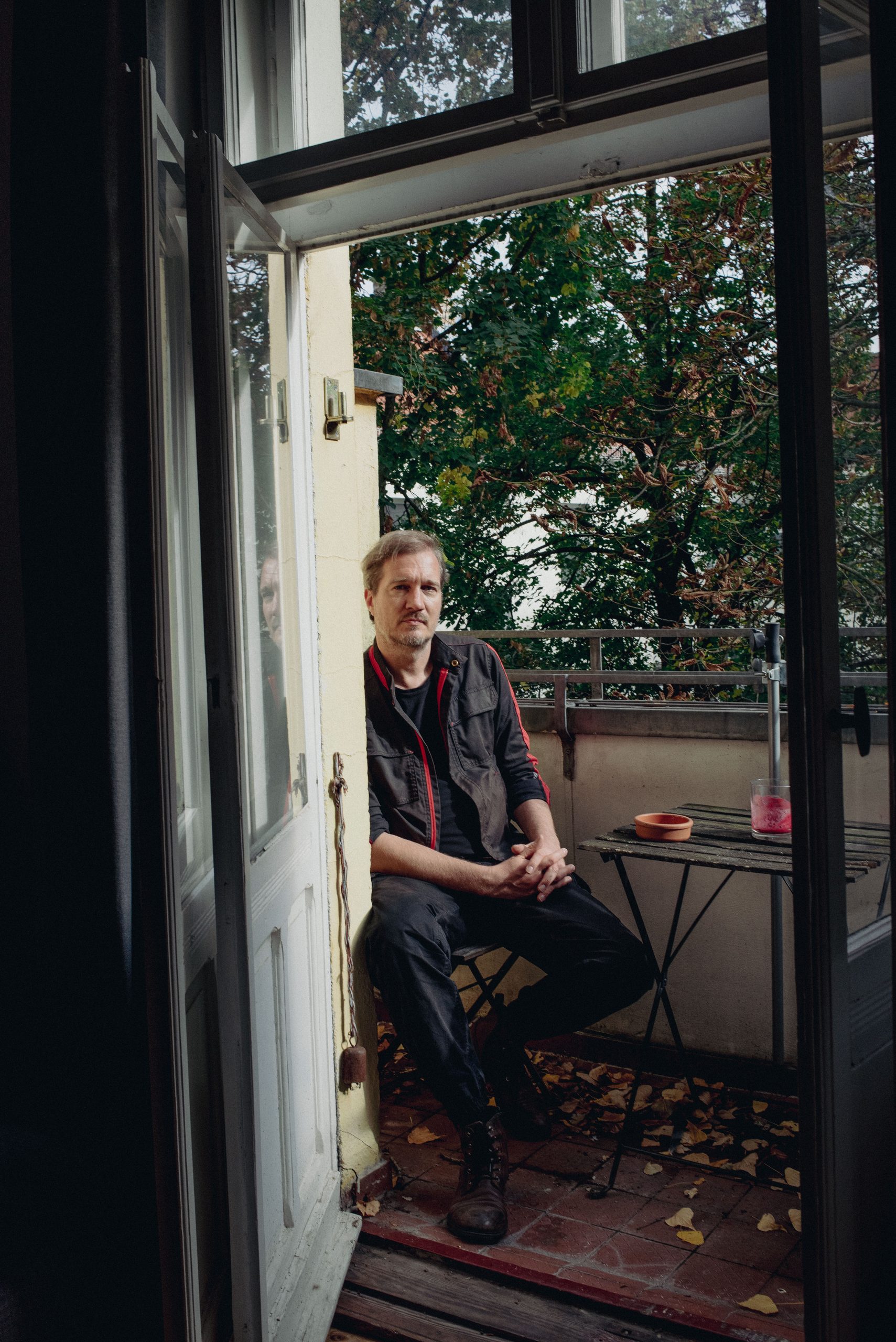
Multi-media, Berlin-based artist and filmmaker Daniel Kötter traces political questions across landscapes and through ways of experiencing time. His projects have explored urbanisation, borders and mining. They focus on the relationship between people and their environments, often developing through long-term collaborations. His 2021 documentary, Water & Coltan, returns to Berlin this November as part of AFRIKAMERA’s REFLECT programme. The film is a project created by Kötter and Congolese creatives. In the film, the post-mining landscapes of Germany’s Ruhr area are juxtaposed with those in the Democratic Republic of Congo after the extraction of coltan, a key component in the phones and computers we use every day. It links seemingly distant landscapes to the devices that structure our contemporary life. Ahead of the screening at Arsenal, we spoke to Kötter about his route into filmmaking, the politics of time and space and why, as he puts it, “Every one of us is carrying a piece of Congo in our pockets.”
Could you tell us a little about yourself and how you came to filmmaking?
It’s a long, ongoing process. With a background in music and theatre, I started directing music theatre performances. The very first one was an opera that also required a film as part of the libretto. I found that this medium suited me more than being a classic director, so I started using film and video quite early in my work. Around 2001, I started really making films for the cinema. I still make other work, but it’s a long transformation process that will probably end the day I die.
Sounds like your interdisciplinary approach happened very organically.
I didn’t have a single minute of film education in my life. I sometimes think the more interesting filmmakers are those who can say that. I was mostly interested in the political implications of the experience of time. It didn’t matter so much as long as the medium I was working in was time-based and looking at the idea of political space. That’s how I choose to wander between different media, and especially between different institutional and architectural contexts. Cinema is a very formatted way of presenting something, and sometimes the black box theatre offers more opportunity for the audience to shape the experience differently.
Was there any work or medium that helped set you on this path?
There were a lot of influences and things that fascinated me at different times. I once had a workshop with Harun Farocki. That was life-changing. It made me read all media differently and understand how we create time and space politically, through images and sounds, and what that means for our societies.
What draws you towards a particular subject or place? Where does a new project usually begin for you?
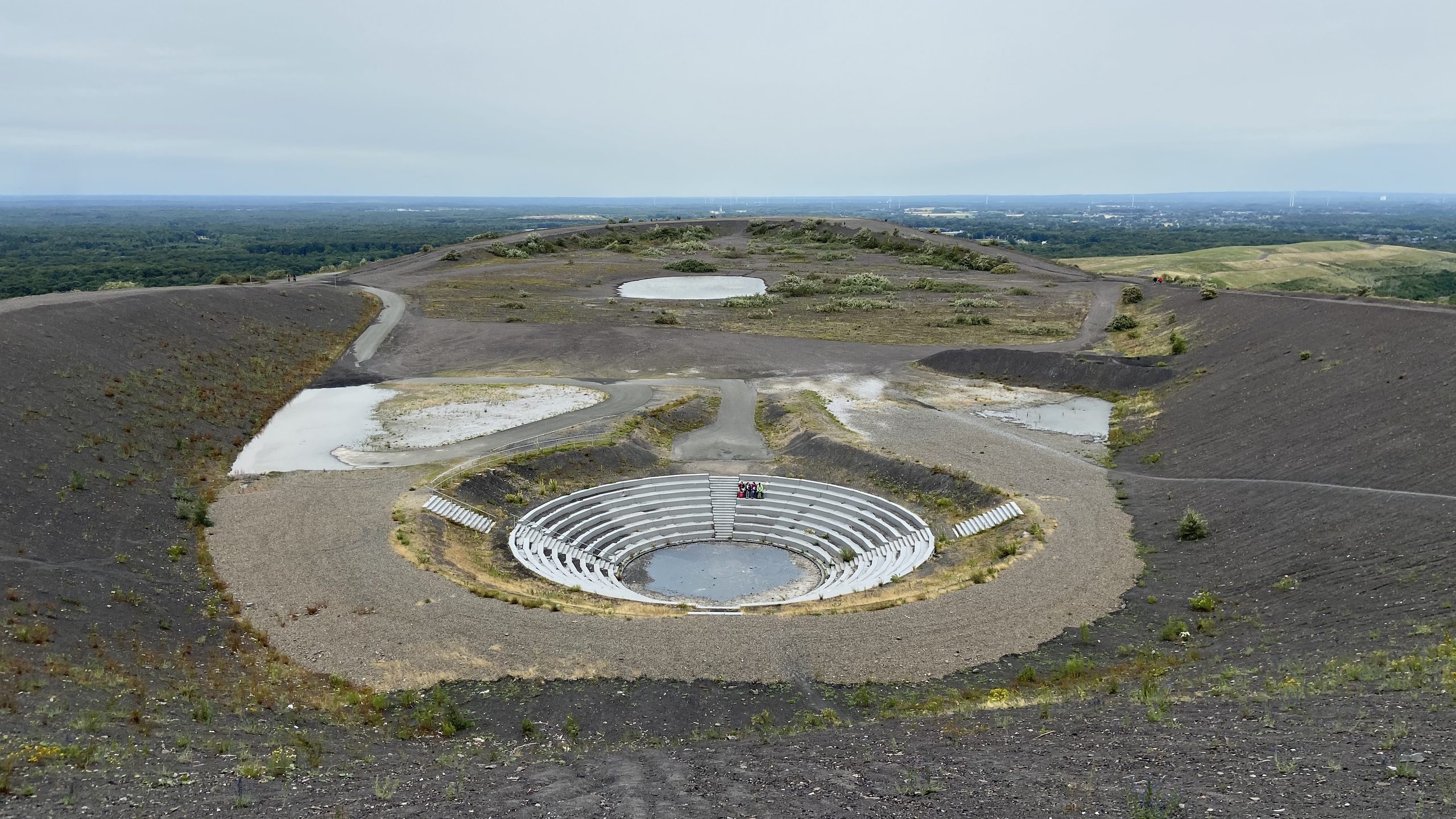
I like to work in trilogies. Usually, once I’m about to finish one of those trilogies, the last part starts the next one. For example, for a long time I was working on questions of urbanisation in a series of films. Out of this interest in urban centres emerged an interest in urban peripheries and landscape. Out of the interest in landscape emerged an interest in mining, in this large-scale transformation and what it means. Then I started thinking in a very political sense about landscape and space, and started working on border regions. It’s a slow process. You can say it’s this project, that project, but it’s more of a crossfade. They’re all related to each other and they’re all dependent on collaboration. What other people bring into my life starts to interest me.
Can you tell us a little about Water & Coltan?
I didn’t have a single minute of film education in my life.
Water & Coltan is part of a series that deals with the question of mining and its impact on local communities, but also our global economies. It started with a collaboration with Indonesian artist Ikbal Lubys, which is still ongoing today between Papua and Germany. In the same series, I had previously worked in the Democratic Republic of Congo with people I wanted to keep working with. So Water & Coltan started as a continuation of working with the same people and on a topic that I had explored in the Landscapes and Bodies series. It’s a very close collaboration with three Congolese collaborators: the journalist Olande Byamungu, the social worker Yasmine Bisimwa and engineer Christian Muhigwa. The project was very much shaped by their input, so it’s a good example of how my topics are also changed through encounters with certain people. The film was made in 2021, but it continues to be programmed.
Why do you think it still feels relevant now?
I think it’s the crossover between ecological and social topics that stays relevant. Coltan is in all of our mobile phones that we’re carrying around. I always say, “Every one of us is carrying a piece of Congo in our pockets.” This stays relevant because we’re dependent on it. We need to understand that these supposedly far-away places are actually very close to us. That’s one of the aspects of why this work keeps recurring. I think there is another thought that’s important here. In my eyes, current Western cosmologies of fascialisation [the wellness trend of obsessing over fascia], like coloniality, again use geographic distance to construct asymmetric cultural differences by assigning distant times to places that, in reality, are strongly connected to our contemporary consumerist societies by extractive exploitation. The film, by superimposing the post-mining landscapes of the German Ruhr area and the coltan extraction sites in the Democratic Republic of Congo, tries to blur these constructed differences in space, time and culture.

You’ve worked in different formats and contexts. How do you think about the relationship between the audience and the spaces you create for them?
It’s very important to me. I work both for cinema and for installations, black boxes and sometimes white cubes. Each of those spaces brings different pre-formatted relations between the work and the audience. As much as I like cinema as an immersive space that tries to make us forget about our bodies, I also like to work on the opposite: to provide an immediate, immersive spatial experience for the audience, related in a way to the topics. If I deal with political space in my projects, the space of the presentation, the screening or the performance is also a political space, because there are people coming together. That’s why I started working with 360° documentary film.
For those unfamiliar with the term ‘360° documentary’, could you explain how the work is experienced?
It’s not VR. I always have to insist on this. It’s a very concrete documentary film, but it gives the audience a very different, and also ethical, approach to the space that I’m filming compared to the more frontal situation in the cinema. Water & Coltan was filmed with 360° cameras and was originally designed to be experienced through VR glasses. The audience sits on turning chairs and can look around freely inside the filmed environment.
What else are you working on at the moment? Are there new directions or subjects you’re particularly interested in?
We need to understand that these supposedly far-away places are actually very close to us.
As always, I’m working on several projects at the same time. Both of the main projects I’m preparing right now are growing out of previous projects. Water & Coltan and Landscapes and Bodies were about mining. The follow-up project was about deforestation, so it’s on the surface of the Earth. The project I’m preparing right now is about the aerosphere, so we’re going up into the air. But it will again be with Congo, or the Democratic Republic of Congo, and Indonesia, and with the same collaborators. It’s really nice to go back to Water & Coltan and see the whole journey from back then to the next year. That’s something I’m preparing right now. Then, from this research into border regions, I made a trilogy of films: one shot in Armenia, the other one in the north of Kosovo. Now I’m preparing the third part of this trilogy, which I call the ‘Psychogeography Trilogy’, about the collective psyche in war-torn border regions. I’m shooting the next documentary in Iraqi Kurdistan at the end of this year in November. I’ll go for a six-week shoot to Kurdistan.
How do you find your collaborators?
For each project, it’s different. Mainly, it’s coincidences. One of my main collaborators in Indonesia actually got to know about me on an exchange platform of the Goethe-Institut in 2017, and we started working there. The journalist Olande Byamungu, who will also be present at AFRIKAMERA, I met through the project Water & Coltan. I asked friends living in the Ruhr area, because the project was supposed to be about the Ruhr area and Congo. Olande at that time started living in the Ruhr area. She grew up between Germany and Congo, and still goes back and forth. Someone gave me her contact and we met for coffee. At first, I just wanted to know her perspective on Germany; by now, it’s a six- or seven-year-long intense collaboration.
Berlin has been your base for a long time. Do you have a favourite cinema or a particular Berlin film experience that has stayed with you?
Berlin was my base for the last 30 years. I grew up and grew into filmmaking here. Small cinemas like B-Ware Ladenkino or fsk, and more recently Wolf or Krokodil, are all doing amazing work and are important to me. Funny enough, although I was already into video and film, the first time I ever attended a screening at the Berlinale was in 2011. Quite late. The very first screening I attended was the world premiere of The Turin Horse by Béla Tarr. I’ll never forget half of the audience walking out. And I just witnessed the birth of an absolute masterpiece of cinema history. There was this split between some people who knew what they were witnessing and others who were thinking, ‘What is this shit?’ That’s great about Berlin. It provides these kinds of opportunities for these kinds of experiences. They are life-changing.
For more information visit danielkoetter.de and catch Daniel presenting Water & Coltan at Arsenal during AFRIKAMERA 2026, running from Nov 11-15 at 18:00 daily.
