

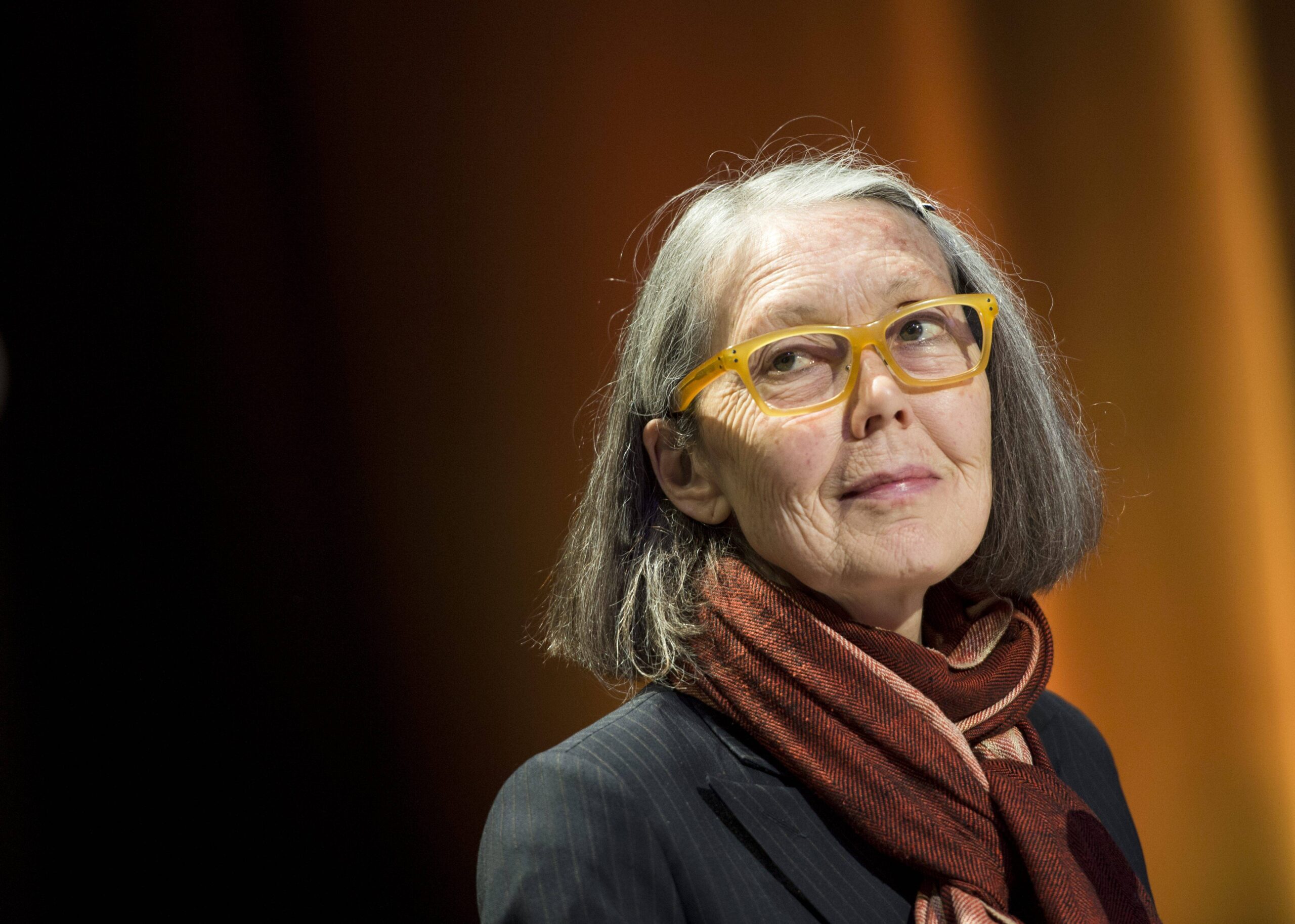
This month, Anne Carson won the Nobel Prize for Literature. It’s the best thing that’s happened to Canada since someone first tapped a maple tree. Or at least the Canadian literary scene is very excited. I was also happy to hear it. Firstly, because I never recognise the names of Nobel winners – not even the literary ones. Plus, Anne Carson’s writing is just incredible; if you’ve never read The Glass Essay, go read it right now. Plus, after seeing Anne Carson at Berlin’s Poesiefestival in May and Han Kang at the Philharmonie Berlin in September, I’ve been in the same room as two Nobel Prize winners this year, and that makes me feel all warm and fuzzy inside.
Being in the same room as a Nobel winner does have a certain energy. There’s no more prestigious validation. You’ve no doubt, absolutely, 100% ‘made it’. Not all prizes give that impression, mind. Some feel like a horse race between publishers (cough Booker cough); while winning them is impressive, they just don’t hit the same. Han Kang happens to have both. I found her very inspiring. She sat poised watching the Berliner Philharmoniker who accompanied her excerpts from Light and Thread and We Do Not Part. She told us how she lived in a small, traditional hanok house in Seoul, with just about enough space for books and a writing desk. ‘Here is a ‘Proper Writer’’, I thought. ‘Here’s someone who genuinely spends all of their time reading, writing and thinking about their works in progress’ – not a Berlin writer who calls themself a writer but writes here and there when they can be arsed (like me).
Anne Carson held that same Nobel energy. She put on a show. It was a live performance of her text Lecture on the History of Skywriting. There was light design, stage direction, different characters played by her partner Robert Currie. It verged on theatre. It was brilliant. Then, after all that, there was an interview, and well… the interview was a bit of a disaster.

Here’s a ‘Proper Writer’, I thought. Here’s someone who genuinely spends all of their time reading, writing and thinking about their works in progress.
Part of the problem was that the audience had no time to process the rich performance they’d just seen. Another problem was that Anne (or Carson, as she asked to be called) clearly did not enjoy explaining herself. She openly disdained being interviewed, giving vague or monosyllabic answers. It made me think: should we nag artists into post-performance interviews? Especially after they’ve put everything they want to say into an intricately crafted piece of art? Isn’t asking them to dissect what we’ve just heard a little reductive? Carson seemed to think so. After that, I found out that even witnessing an interview with Anne Carson was a rare treat. She’s very private. She’s openly called interviews and biographical profiles “useless” and an “invasion of privacy”. Maybe that’s exactly what makes her a Proper Writer too.
It reminds me how after Han Kang received the call from the Nobel Committee, she told them thanks and she’d celebrate by drinking tea with her son. It reminds me of Doris Lessing’s reaction to her Nobel Prize win in 2007. You can watch the video of it. She’s climbing out of a black cab and a photographer asks her, “Have you heard the news?” When he tells her she’s won the Nobel Prize for Literature, she moans and goes, “Oh Christ. It’s been going on now for 30 years. I can’t get any more excited,” and waves him away. It’s so good. Later, when the photographer reminds her that the Nobel is a celebration of her life’s work, she says, “I’ve won all the prizes in Europe. Every bloody one. I’m delighted to win the whole lot, alright? It’s a royal flush.”

What a legend. What a Proper Writer. See, that’s the impression I got from the Nobel-Prize-winning writers I shared a room with this year: it’s not about the prize. It’s not about people liking you. It’s not about fame or fortune. They’re doing it because it’s what they do. It’s their life’s work. They’re Proper Writers. They write.
