


China's LineShine supercomputer dethrones US' El Capitan, secures first place in Top 500 list — first machine in the rankings to sustain more than 2 ExaFLOPS of double-precision performance using only CPUs
China is back to Top 500 list with a vengeance.
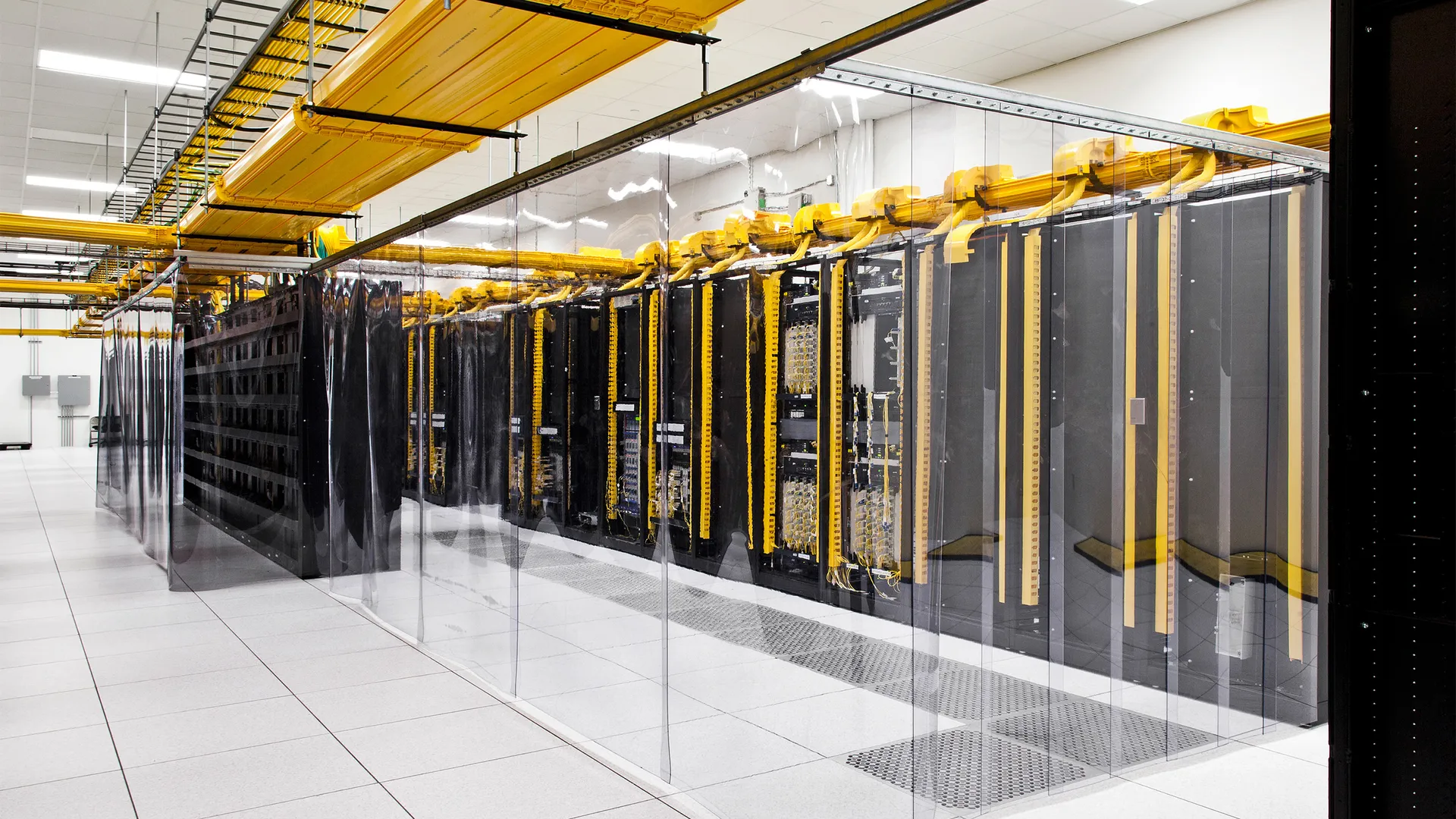
China's LineShine supercomputer has dethroned El Capitan as the world's number one supercomputer, going straight to the top of the charts after the National Supercomputer Center in Shenzhen (NSCS) submitted its results.
LineShine hit 2.198 FP64 ExaFLOPS in the Linpack benchmark and became the industry's first machine in the Top 500 list to sustain more than 2 ExaFLOPS of double-precision performance using only CPUs. The system is deployed at the National Supercomputing Centre in Shenzhen and was built by the Shenzhen Cloud Computing Center using semi-custom 304-core LX2 processors based on the Armv9 instruction set architecture and running at 1.55 GHz. The machine employs 13.79 million cores in total, uses proprietary LingQi interconnect, and consumes 42.2 MW of power.
From a performance-per-watt point of view, the LineShine machine delivers 52.07 GFLOPS/W, which is below El Capitan's 60.94 GFLOPS/W. However, LineShine by far outperforms Fugaku — another CPU-only supercomputer that used to be the No.1 HPC system several years ago — that can only deliver 14.78 – 16.84 GFLOPS/W depending on whether its efficiency is optimized or not.
LineShine also moved to the top of the HPCG ranking with 22.00 HPCG-PFLOPS. However, the supercomputer achieved 7.92 mixed-precision EFLOPS in HPL-MxP, which puts it behind El Capitan, Frontier, and Aurora. This limits LineShine's usability for AI training and inference, but this can be justified with its exceptional performance for traditional supercomputer tasks.
Each LX2 CPU relies on two compute chiplets and has a total of 304 CPU cores organized into eight CPU clusters containing 38 cores each. Every core includes Arm SVE (Scalable Vector Extension) and SME (Scalable Matrix Extension) units that accelerate vector and matrix operations used in AI training and scientific computing that support FP64, FP32, BF16, FP16, and INT8 data formats. The chip features a rather unusual memory architecture that pairs 32 GB of on-package HBM, offering up to 4 TB/s of bandwidth with as much as 256 GB of external DDR5 memory to maximize both bandwidth and capacity.
Despite this, the processor only gains 3.6X performance when moving from FP64 to mixed-precision data, which is lower compared to systems that integrate low-precision accelerators, such as AMD's Instinct MI300A or Intel's Ponte Vecchio. While an Armv9 CPU with SVE/SME can accelerate FP16/BF16/INT8 workloads, its mixed-precision uplift remains limited compared to systems with accelerators due to many reasons, including memory bandwidth, software maturity, and interconnect efficiency. That said, it may be too early to make final conclusions about the LX2 and its usability for mixed-precision workloads.
In any case, the very fact that a Chinese supercomputer has achieved extraordinary FP64 performance is remarkable. Furthermore, the fact that NSCS has actually submitted results to Top 500 indicates that the organization is confident that the LineShine supercomputer relies exclusively on domestic technologies and the U.S. government cannot affect the production of these technologies.
Get Tom's Hardware's best news and in-depth reviews, straight to your inbox.

Follow Tom's Hardware on Google News, or add us as a preferred source, to get our latest news, analysis, & reviews in your feeds.

Anton Shilov is a contributing writer at Tom’s Hardware. Over the past couple of decades, he has covered everything from CPUs and GPUs to supercomputers and from modern process technologies and latest fab tools to high-tech industry trends.
-
usertests Is this using TSMC nodes? The GFLOPS/W is comparable to others with the Green500 #1 being 41% more efficient, while El Capitan is only at 17%.Reply
Top500 website is broken as usual with nonfunctional links to Green500 lists. -
TechieTwo ...and I have some ocean front property in Arkansas that you'all be interested in buying. ;)Reply -
bit_user Reply
So, the whitepaper they previously published goes into quite some detail about its memory subsystem, which is highly NUMA. In fact, to such an extent that they optimized their code on it by running separate MPI nodes on each of those 38-core clusters, since each cluster has a local HBM stack and relatively poor inter-cluster and inter-die bandwidth.The article said:Each LX2 CPU relies on two compute chiplets and has a total of 304 CPU cores organized into eight CPU clusters containing 38 cores each. ... The chip features a rather unusual memory architecture that pairs 32 GB of on-package HBM, offering up to 4 TB/s of bandwidth with as much as 256 GB of external DDR5
Also, the dependence on that relatively small amount of HBM to scale performance makes it fairly unsuitable for general-purpose workloads, even though it can theoretically handle them.
Not their first. See: https://en.wikipedia.org/wiki/Sunway_TaihuLightThe article said:In any case, the very fact that a Chinese supercomputer has achieved extraordinary FP64 performance is remarkable.
IMO, the remarkable thing is its efficiency (if accurate). I think scaling up ExaFLOPS is not that hard, if your pockets are deep enough, but efficiency would be a better signifier of sophistication and advancement. However, even that can be swung by $$$, since you can easily boost perf/W by simply running more nodes at lower clock speeds. Due to the relative cost of energy vs. silicon, most HPC operators prefer to run their chips towards the upper end of the power envelope, which hurts them on efficiency metrics. -
trica I'll believe the results when they've been verified in-person by a team of 100% non-Chinese examiners. I'm even less likely to believe anything coming from the CCP than I am the manipulated information distributed by the US government, and that's really saying something.Reply -
nookoool Replyusertests said:Is this using TSMC nodes? The GFLOPS/W is comparable to others with the Green500 #1 being 41% more efficient, while El Capitan is only at 17%.
Top500 website is broken as usual with nonfunctional links to Green500 lists.
In other articles, it is mention to be Huawei chips. -
usertests Reply
It seems like they did a good job on making the supercomputer efficient, especially if they were limited to some SMIC DUV-based 5nm node.nookoool said:In other articles, it is mention to be Huawei chips.