


Intel's Googlebooks might not run some Android apps as well as Qualcomm's — Google says this is because Android apps were designed for Arm chips
Google hasn't said which apps are affected.
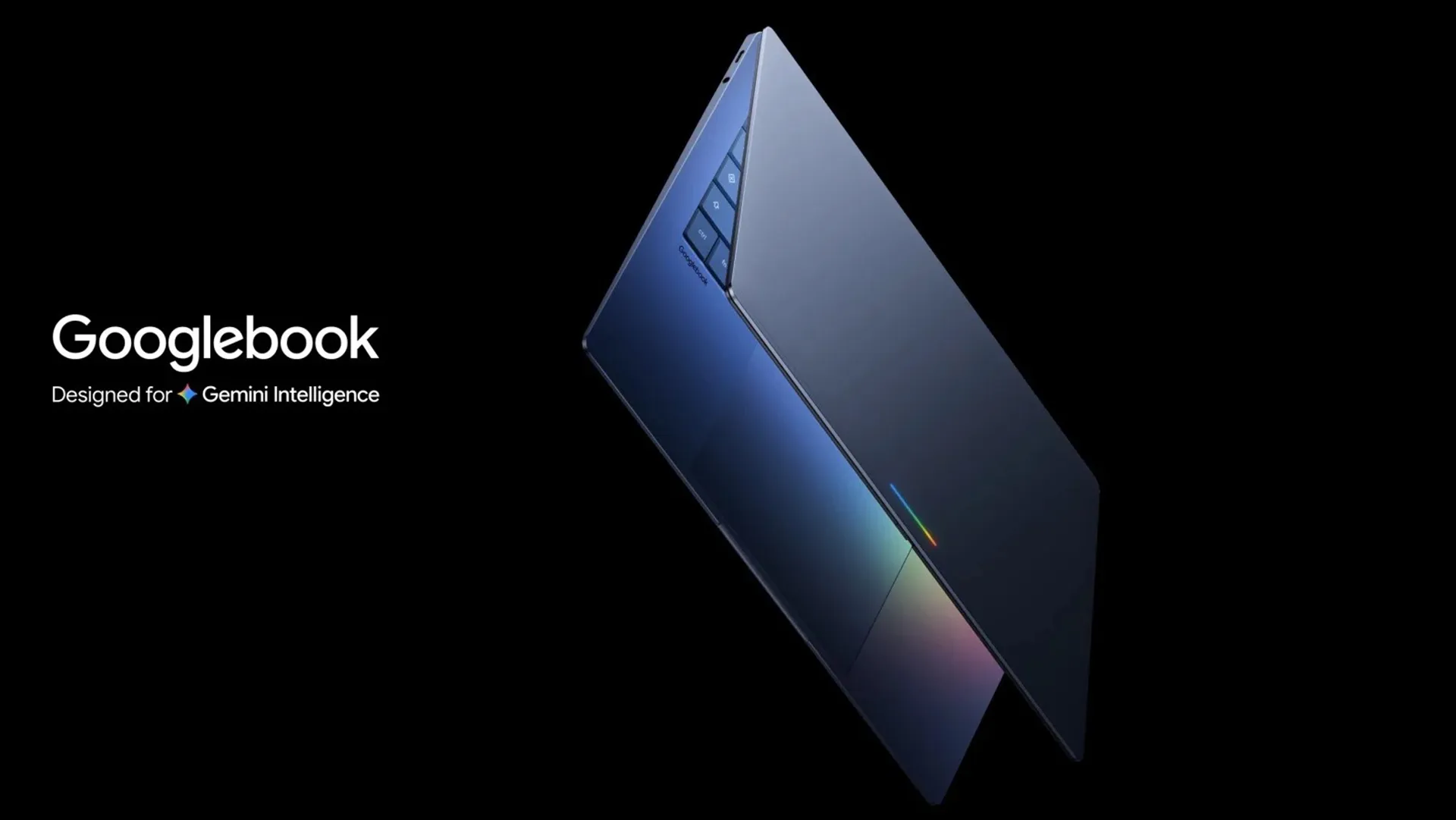
Google introduced five new laptops recently, which went on sale Sunday. The Googlebooks are intended to run Android apps natively; however, Google admitted in a statement to Android Authority that not all apps may perform as well on the systems with Intel processors as those with Qualcomm chips.
"The vast majority of Android apps run smoothly across both Intel and Qualcomm Googlebooks right out of the box," Google told the Android-focused site. "Because many Android apps were originally designed for Arm chips, a small handful of complex apps or games need some developer tuning to run their best on Intel-based platforms. We’re working hand-in-hand with app developers, Intel, and Qualcomm to continuously optimize performance and expand compatibility across the entire portfolio."
Google has not named specific apps that might have issues on Intel-based systems. None of these claims were made prior to Googlebooks being made available on store shelves.
The Googlebooks with Intel processors are the Asus Googlebook 14, Lenovo Googlebook 15, and Acer Googlebook 14. The Dell XPS Googlebook and HP Googlebook 14 use Qualcomm's Snapdragon X Elite chips.
Most Android apps will work on Intel Googlebooks due to the wide use of Kotlin for Android development, and many apps have been made using Java. If an app's pipeline is mostly Java/Kotlin, it will have a high chance of working on the Intel Googlebook thanks to their architecture-agnostic libraries and SDKs.
However, there are still apps out there relying on native components compiled exclusively for ARM64 with no x86-64 versions. Intel Bridge and Android’s Native Bridge can translate ARM64 code for x86 compatibility, but unless the developer actually accounts for x86, it might run into some issues.
All of the applications on Googlebookx will come from Google's Play Store, which will include a mix of optimized and unoptimized apps. You can't download applications from the web unless you're redirected to Google Play.
Google wants to compete with the Mac by offering a full Android ecosystem experience from phone to laptop, similar to the conveniences Apple offers between their laptops and phones. With prices ranging from $899-1,299, it is a fairly large jump from the MacBook Neo’s $699-799; however, the Googlebook offers more RAM, giving you either 16GB or 32GB options. Storage remains limited, only offering either 256GB or 512GB, but each Googlebook comes with 12 months of Google AI Pro that includes 5TB of cloud storage currently valued at $249.99.
Get Tom's Hardware's best news and in-depth reviews, straight to your inbox.

Follow Tom's Hardware on Google News, or add us as a preferred source, to get our latest news, analysis, & reviews in your feeds.

Jhet Borja is a serial hobbyist who was taking apart toys from childhood and sketching inventions. He now loves doing DIY projects ranging from designing custom 3D-printed parts, building PCs and keyboards, all the way to woodworking. If he's not getting his hands dirty, he's probably brainstorming his next project.
-
hotaru251 .....tell that to apple who made x86 run on arm sometiems betetr than native...Reply
Google just being lazy and not wanting to develop a better transition layer. -
Pierce2623 I really doubt translating ARM apps to x86 chips works as the opposite. People have never really worked on it because nobody cares about running ARM apps on x86. I don’t think the infinitely more mature x86 to ARM translation layers can just be flipped around to go the opposite direction without significant work. Intel probably should have steered clear of this. ARM chips will destroy it in any benchmarking of Android apps on these “not Chromebooks”.Reply -
Pierce2623 Reply
Name one x86 app that runs better on Apple silicon through translation than it does on equally modern and expensive x86 chips. Extraordinary claims require extraordinary evidence. Now don’t bring me something running an ARM native version because thats not what you claimed.hotaru251 said:.....tell that to apple who made x86 run on arm sometiems betetr than native...
Google just being lazy and not wanting to develop a better transition layer. -
kealii123 I thought RISC and therefore ARM were essentially a subset of x86, and even modern x86 processors have to translate applications using archaic x86 instructions "under the hood" to more modern implementations.Reply
Meaning, it should be easier to write ARM=>x86 translations than the other way around , unless I'm missing something -
VizzieTheViz I don’t use my mbp (first generation retina) anymore but I used it for a couple of years and I’ve never ever then (or now using a Lenovo laptop) felt that there was an app on my iphone that I really wanted to run on my laptop.Reply
What apps are there that people have on their phones that they desperately want to use in their laptops and can’t accept a small performance hit for if it’s an x86 laptop running an ARM app?
I can’t really imagine this being an issue but maybe there’s a whole world of apps out there on phones that I’ve totally missed. Please enlighten me. -
usertests Reply
There's always some obscure/legacy app(lication) that somebody wants to use.VizzieTheViz said:What apps are there that people have on their phones that they desperately want to use in their laptops and can’t accept a small performance hit for if it’s an x86 laptop running an ARM app?
But like you said, you can probably accept a performance hit. A laptop should also be able to brute force frequency compared to a phone (at least if it's plugged in). -
TerryLaze Reply
First release in 2011 that 15 years ago...Pierce2623 said:People have never really worked on it
https://www.bluestacks.com/previous-versions.html
Windows Subsystem for Android (WSA), it shipped with ARM64 support when previewed in October 2021
But on the other hand intel will destroy anything that isn't an ARM app.Pierce2623 said:Intel probably should have steered clear of this. ARM chips will destroy it in any benchmarking of Android apps on these “not Chromebooks”.
Or be able to run them at all, because lets face it, if you don't have a super high end ARM cpu you aren't running any x86.
That's not what he claimed though.Pierce2623 said:Name one x86 app that runs better on Apple silicon through translation than it does on equally modern and expensive x86 chips.
No it's not an subset, x86 does use some of the same tactics as risc in that it has a bunch of extra instructions that try to work in a single cycle just as risc does, but that's as far as that goes.kealii123 said:I thought RISC and therefore ARM were essentially a subset of x86,
No, modern CPUs include the ancient instructions, they might have some extra instructions that swap out the older ones for modern ones though.kealii123 said:and even modern x86 processors have to translate applications using archaic x86 instructions "under the hood" to more modern implementations. -
hwertz Reply
Modern Intel and AMD CPUs (not even that modern, going back to the AMD K5, socket 7 era) internally decode complex instructions and effectively run a RISC core. But yeah. effectively it's true, Intel has not retired any old instructions, addressing modes, and so on. ARM has to some extent, there's some old stuff from ARMv6 and older that ARMv7 (the 32-bit ARMS that have been around for probably 20 years) and v8 (64-bit ARM) do not support.TerryLaze said:
No, modern CPUs include the ancient instructions, they might have some extra instructions that swap out the older ones for modern ones though.
So, what the heck does a notebook that's going to be running Android apps need 16-32GB RAM for anyway? These Googlebooks sound entirely too pricey to me. -
usertests Reply
I think they're designed for on-device AI whatever. So they would definitely want 16 GB minimum (for example, I believe Apple Intelligence has a 12 GB minimum).hwertz said:So, what the heck does a notebook that's going to be running Android apps need 16-32GB RAM for anyway? These Googlebooks sound entirely too pricey to me.
The Googlebook OS is a successor to ChromeOS that is described as a "fusion between Android and ChromeOS". So it would obviously be able to run Android apps. -
Pierce2623 Reply
Running mostly out of the micro op cache does not make x86 cores effectively a “RISC core” because a “RISC core” is a concept you just invented. RISC cores don’t have any real physical differences to an x86 core. X86 was breaking down big instructions into micro ops before ARM was the elephant in tbe room. RISC cores and x86 cores are both trying to retire as many instructions as quickly as possible. The main reason ARM cores are more efficient is simply because ARM is a more modern ISA and efficiency was their central design philosophy when developing the ISA. Now that ARM is trying to increase performance and x86 is trying to increase efficiency, the differences have gotten smaller. If AMD went all out trying to develop a super efficient laptop chip with aggressive power gating like Panthet Lake or Lunar Lake, it would be extremely efficient. AMD just built a standard 4nm monolithic chip in Strix Point with nothing exotic and it exceeds Panther Lake’s CPU on performance per watt. If it had all the extreme power gating and s newer node it would give incredible battery life.hwertz said:Modern Intel and AMD CPUs (not even that modern, going back to the AMD K5, socket 7 era) internally decode complex instructions and effectively run a RISC core. But yeah. effectively it's true, Intel has not retired any old instructions, addressing modes, and so on. ARM has to some extent, there's some old stuff from ARMv6 and older that ARMv7 (the 32-bit ARMS that have been around for probably 20 years) and v8 (64-bit ARM) do not support.
So, what the heck does a notebook that's going to be running Android apps need 16-32GB RAM for anyway? These Googlebooks sound entirely too pricey to me.